Article | Refractions
Board School: Wood Flooring Finishes

Article | Refractions
Board School: Wood Flooring Finishes

Article | Refractions
Board School: Wood Flooring Finishes
Board School is our series of educational pieces created to help you maximize your appreciation and the longevity of your wood floors.
February 5, 2026
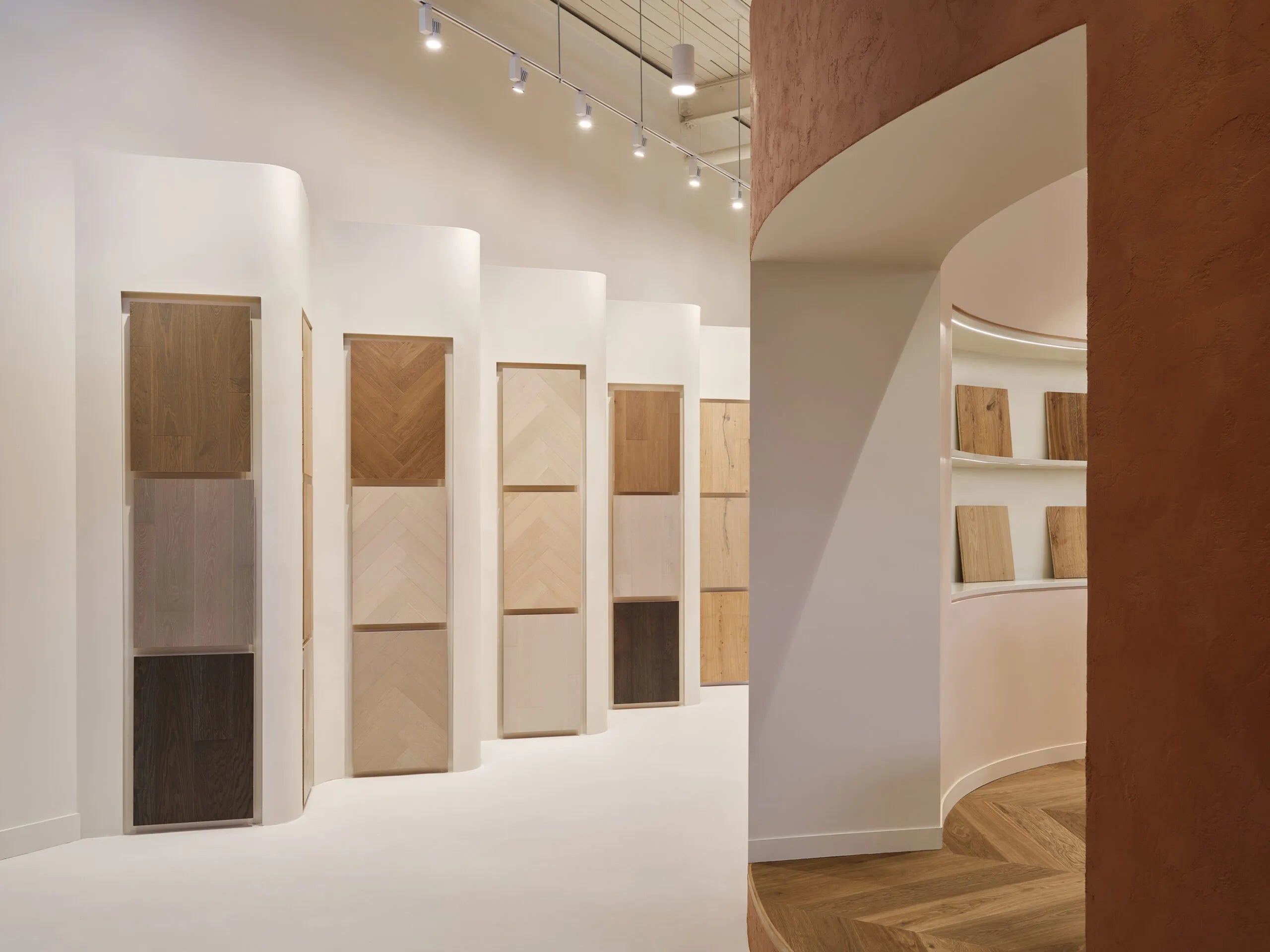
When it comes to finishes, wood flooring offers a wide range of creative possibilities, yet most options fall into two primary categories: top coat finishes and wood saturation styles. Top coats are typically urethane-based and form a protective layer on the surface of the wood, offering durability and resistance to wear.
Wood saturation finishes, on the other hand, are generally oil-based and penetrate into the fibers of the wood, enhancing its natural texture and allowing the material to age more organically over time. Understanding the differences between these approaches is key to selecting a finish that aligns with both aesthetic goals and long-term performance.
Top Coat Finishes: How They Work
This type of finish serves as a protective barrier for your hardwood floor. The durability of the finish is typically measured in its ability to resist abrasion, which in real life means how well it can resist the appearance of foot traffic patterns. Being resistant to scratches is important, but disguising them is even better. For example, low gloss levels make wear-and-tear less visible.
Top Coat Finishes: Care Guidelines
Priority number one for this type of finish is to protect the top coat itself. If the finish wears through, the wood floor beneath can become damaged, making repair a much larger project. Start with entrance mats, then encourage your family and visitors not to wear shoes inside — try keeping a selection of house slippers by the door. Lastly, make sure to sweep regularly to prevent scratches. Learn more in our Maintenance Guide for Lacquer Finishes.
Wood Saturation Finishes: How They Work
For this wood flooring finish, the entire plank is soaked through, typically with a botanically-derived oil. Since the wood is saturated, any liquids that spill on the floor are not absorbed and sit on top, which mimics the way wood operates in nature. Wood saturation finishes are typically lower gloss and appear more textured, which provides a base level of innate wear-and-tear camouflage. Over time, your floor is likely to develop a patina depending on your maintenance regime.
Wood Saturation Finishes: Care Guidelines
The most crucial thing to remember with this finish it to maintain the saturation level of the wood over time. If your floor gets too dry, it becomes vulnerable to damage. Maintain the saturation levels by cleaning the floor on a regular schedule with products designed for this finish — typically a type of soap that contains trace amounts of the saturating agent that is absorbed when you clean. Learn more in our Maintenance Guide for Oil Finishes. To maintain this type of finish over the long-term, you will need to re-apply the saturating agent from time-to-time. Despite this additional maintenance, wood saturation finishes are easier and less expensive to clean and repair than top coat finishes.
Related Posts
Interview with Deborah Wang
The space we inhabit can be read as a kind of skin: a sensitive surface that mediates the relationship between the body and its environment. In architecture and interior design, this role is playe...
Read More
Board School: Reviewing Wood Flooring Samples at Home
With qualities that are often subtle and dependent on factors like light and environment, it’s absolutely necessary to take a thorough look at flooring samples in your space. After visiting the Rel...
Read More