Article | Voices
Interview with Deborah Wang

Article | Voices
Interview with Deborah Wang

Article | Voices
Interview with Deborah Wang
The space we inhabit can be read as a kind of skin: a sensitive surface that mediates the relationship between the body and its environment. In architecture and interior design, this role is played by materials. They define how a space is touched, traversed, and perceived over time.
February 2, 2026
Through materials—and thanks to multisensory perception—we experience space not only visually, but with the whole body. Surfaces, textures, sounds, and scents contribute to shaping a deep and personal experience of space.
This article explores the role of materials in interior design as active elements that directly influence how we experience and inhabit space. The theme takes shape through a conversation with Deborah Wang, founder of Deborah Wang Architect (dw /a), an architect and curator whose work moves between the domestic realm, research, and cultural institutions.
Materials and Mood
For Deborah Wang, interior design is not just a matter of style, but of how spaces are actually used: how we move through them, where we pause, what we touch, and what makes us feel comfortable.
“I’ve always been interested in architecture, art, and domestic spaces,” she explains. “I’m especially attentive to how environments influence people, even when we’re not consciously aware of it. We often immediately sense whether a space feels welcoming, uncomfortable, or cold—without knowing exactly why.”
The materials that make up our homes directly affect our mood and the way we live in them. For this reason, material selection becomes a key design decision. Each Relative Floors + Walls collection, based on its material and chromatic characteristics, directly affects the mood and emotions perceived within an environment.
In the Laguna Ceramic Collection, for example, watercolor-inspired colors that softly blend and fade — drawing inspiration from the hues of the Venetian lagoon, such as Aqua, Ash, Coral, Duna, and Fog — convey a sense of calm, balance, and suspension, creating delicate and contemplative atmospheres. By contrast, the Tera Ceramic Collection features colors with stronger pigmentation — including Calce, Ferro, Jade, Lava, and Pumice — which express energy, vibrancy, and warmth, transforming spaces into mediators of vivid and intense emotions.
Materials and Multisensory Experience
In interior design and architecture, floors and surfaces play a central role: they are among the most present and most used elements in the domestic space. For Deborah Wang, design begins with a direct, physical understanding of surfaces.
“Different surfaces feel different,” she explains. “It’s not just a matter of aesthetics or color—it’s a physical sensation.”
This is why, in her projects, the choice of materials always starts from concrete questions: What kind of use will this space have? How many people move through it every day? Is it a highly functional space, like a kitchen, or a more contemplative one? How visible or prominent should a material be?
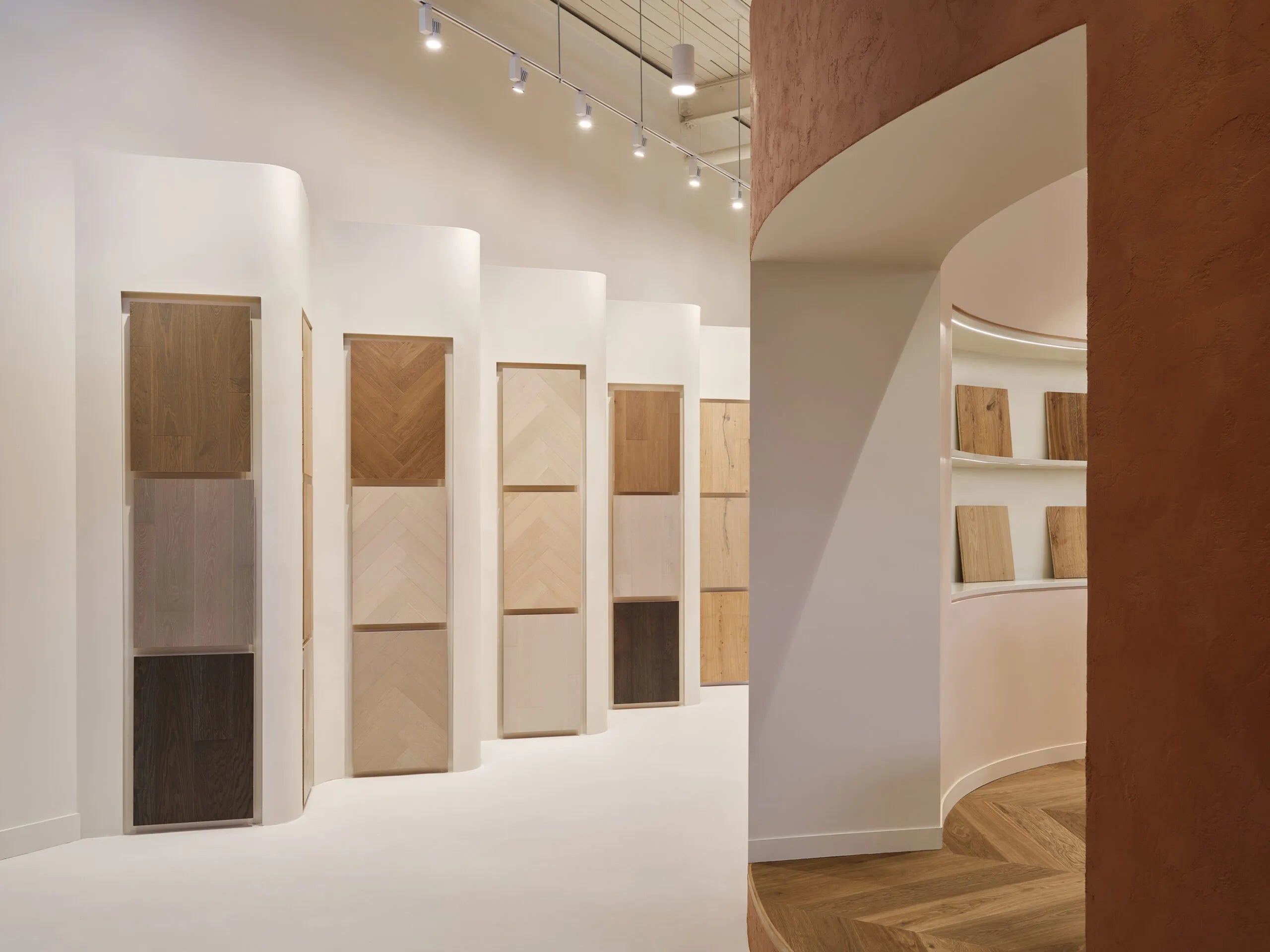
Format, composition, color, and even scent all contribute to shaping the experience of space. Within the Relative Floors + Walls Collections, a wide range of materials can be found — from ceramics and recycled stone to terrazzo, engineered hardwood, PVC-free resilient surfaces, carpets, and wallpapers. This material richness makes it possible to create highly multisensory environments, where surfaces, textures, colors, and forms engage in a dialogue, contributing to a complete spatial experience.


Materials and Identity
The interview highlights two residential projects in which Deborah Wang uses Relative Floors + Walls materials in very different ways, adapting them to the specific character of each context.
In the Annette Apartment, the European Engineered Hardwood herringbone from the Chico Collection performs a dual role—both functional and expressive.On one hand, it evokes a familiar imagery through the slender, elongated scale of the boards evokes traditional flooring; on the other, the herringbone pattern translates a traditional element into a contemporary language. According to Wang, this choice moves beyond anonymity and defines the project’s identity, giving the floor a fine-grain that aligns with the character of the millwork, furniture, and historic building.
In the Manning Semi, the focus is on the kitchen, reimagined not only as a new layout, but as an experience of use. In a narrow Victorian house, the risk is a corridor-like effect; to counteract this, the project adjusts circulation, introducing elements, like a counter and built-in table, that shift direction and guide movement more naturally towards views and areas to dwell. The selection of Italian recycled stone tiles from the Pigmento Collection was both central and carefully calibrated. Multiple tones were tested to achieve a balanced composition, arriving at an earthy material quality that is present without overpowering the space. The result is a natural palette that fosters a calm, welcoming atmosphere for everyday living.


Materials, Longevity and Sustainability
When it comes to the relationship between trends and timelessness, Wang takes a clear position: trends should not be dismissed, but a home should be guided first and foremost by what genuinely resonates with those who inhabit it—and by choices capable of enduring over time.
The key concept is longevity, closely tied to sustainability. Selecting durable, well-crafted, and certified materials reduces the need for unnecessary replacements and invasive renovations, thereby limiting environmental impact over the long term. Even the decision to enhance what already exists, rather than demolishing and rebuilding, is part of the same responsible approach.
This philosophy is deeply aligned with that of Relative Floors + Walls, whose materials are conceived to stand the test of time and are rooted in a concrete commitment to sustainability, supported by certifications and responsible production processes. Free from fleeting trends, these materials give spaces an authentic and conscious identity.
Related Posts

Speaking Wood: The Stairs
Stairs aren’t just a way to move between floors: they’re a key element in a home’s architectural story.
Read More
Board School: Wood Flooring Finishes
When it comes to finishes, wood flooring offers a wide range of creative possibilities, yet most options fall into two primary categories: top coat finishes and wood saturation styles. Top coats ar...
Read More