Article | Refractions
Valentine’s Day is a love story made to last:
Article | Refractions
Valentine’s Day is a love story made to last:
Article | Refractions
Valentine’s Day is a love story made to last:
The relationship between terrazzo and architecture is not a fleeting infatuation—it is a true love story.
February 14, 2026
It grows out of making, out of the tangible reality of everyday work and the need to build something that endures. It is a bond that is built over time, shaped by continuity, durability, and transformation.
Terrazzo does not chase trends: it stays, adapts, and helps give structure and identity to space.
The history of terrazzo
Terrazzo originated in Italy between the 12th and 13th centuries, in Venice. Craftsmen reused marble offcuts from the construction of noble palaces, scattering them onto fresh lime, compacting and polishing them by hand. The result was a continuous, durable, luminous surface.
It was a lightweight yet long-lasting flooring solution—essential qualities for a city built on water. Here, terrazzo did not emerge as a luxury material, but as a practical response: constructive rationality, restraint, and respect for materials.
With the Renaissance, the artisanal gesture becomes more deliberate and refined: terrazzo moves beyond service spaces and enters places of representation, becoming an integral part of architecture and of the expression of power and culture. Seen in buildings such as the Palazzo Ducale, Palazzo Grimani, Villa Almerico Capra, and Palazzo Pitti, it is no longer just a floor, but a tool for shaping space and perception.
The journey: from the Mediterranean to the world
Between the 1920s and 1950s, terrazzo experienced a new golden age. Art Deco and Modernism embraced it as a material suited to modern life: expansive surfaces, monumental lobbies, staircases, corridors, stations, and civic buildings designed to be crossed, used, and worn by time.
It was during these years that terrazzo truly began to travel. Italian craftsmen brought their knowledge overseas, while growing metropolises demanded materials capable of withstanding the pace of urban life. In the United States and Canada, terrazzo lost its local identity and became a shared architectural language, valued for its durability, hygiene, and long-term reliability. Here, terrazzo was no longer just a Venetian legacy—it became an integral part of international 20th-century architecture.


Why terrazzo never goes out of style
Perhaps because terrazzo does not follow trends, but is grounded in enduring values: history, uniqueness, longevity, sustainability, and versatility.
Terrazzo is made from fragments that would otherwise be discarded, recovered and assembled with care and awareness. Every surface is different, formed by unique combinations of aggregates, colors, and densities. Each one takes shape through a series of choices and gestures—no two terrazzo surfaces are ever the same, because every composition is unique.
It is a material designed to last. Terrazzo has crossed centuries without losing its function or meaning, adapting to different contexts and architectural languages, from historic palaces to contemporary spaces. Its sustainability is tangible and concrete: it enhances what already exists, reduces waste, and transforms residue into value.
Then there is versatility. Terrazzo can be discreet or expressive, minimal or decorative, domestic or monumental. It can remain in the background, quietly supporting space, or emerge to define its character with clarity. This ability to evolve without losing its identity is what makes terrazzo still relevant today.


Spezie: a return to origins
These same values take shape today in the Terrazzo Spezie Collection. With this collection, Relative Floors + Walls collection pays tribute to seminato, the original technique from which contemporary terrazzo originates: fragments scattered onto fresh mortar, like seeds on fertile ground.
The inspiration is that of a travelling seed, carried by wind or sea, finding new ground in which to take root. It is a simple yet powerful image: each aggregate opens up a possibility, giving rise to surfaces that are always different from one another.
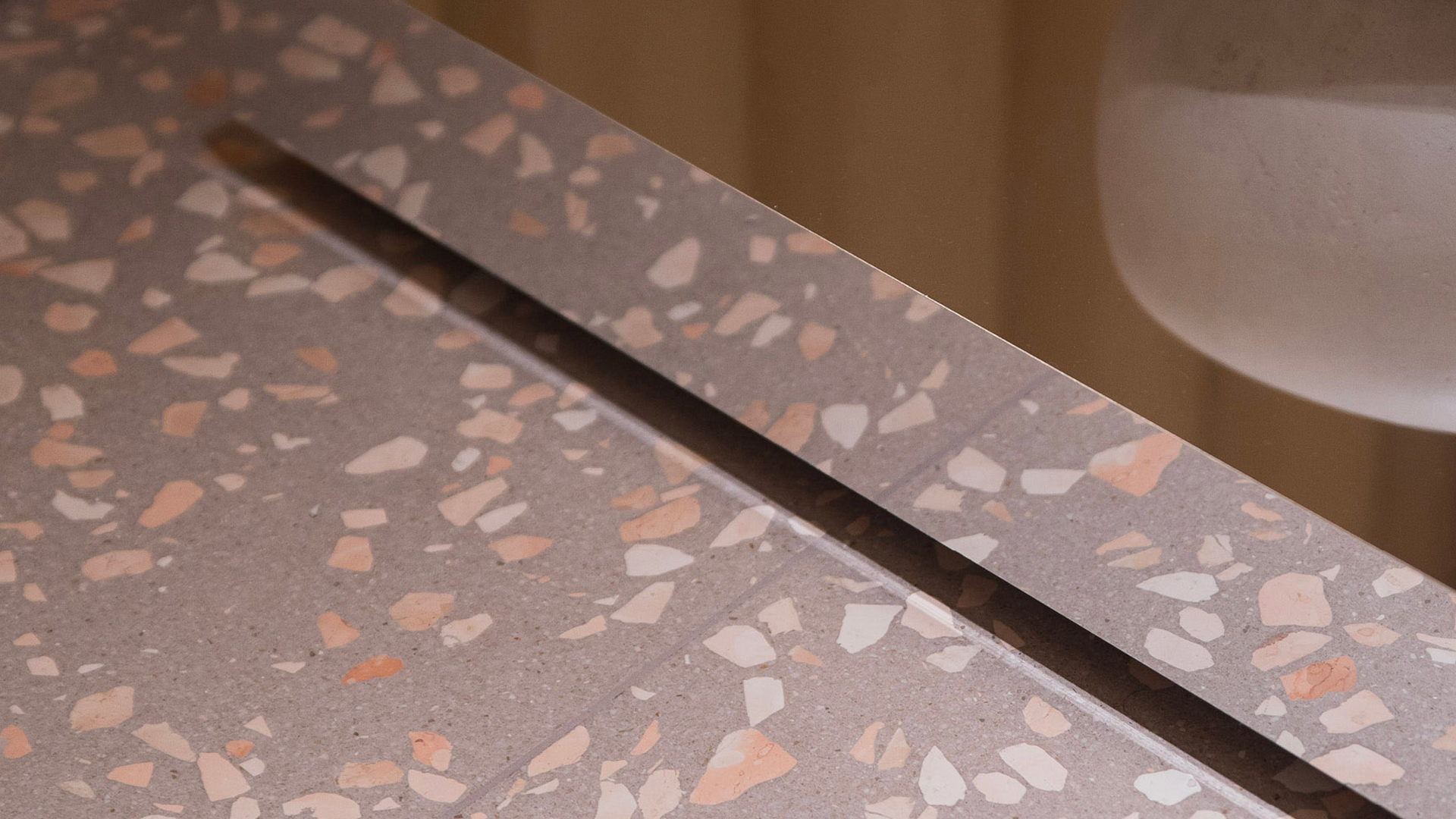
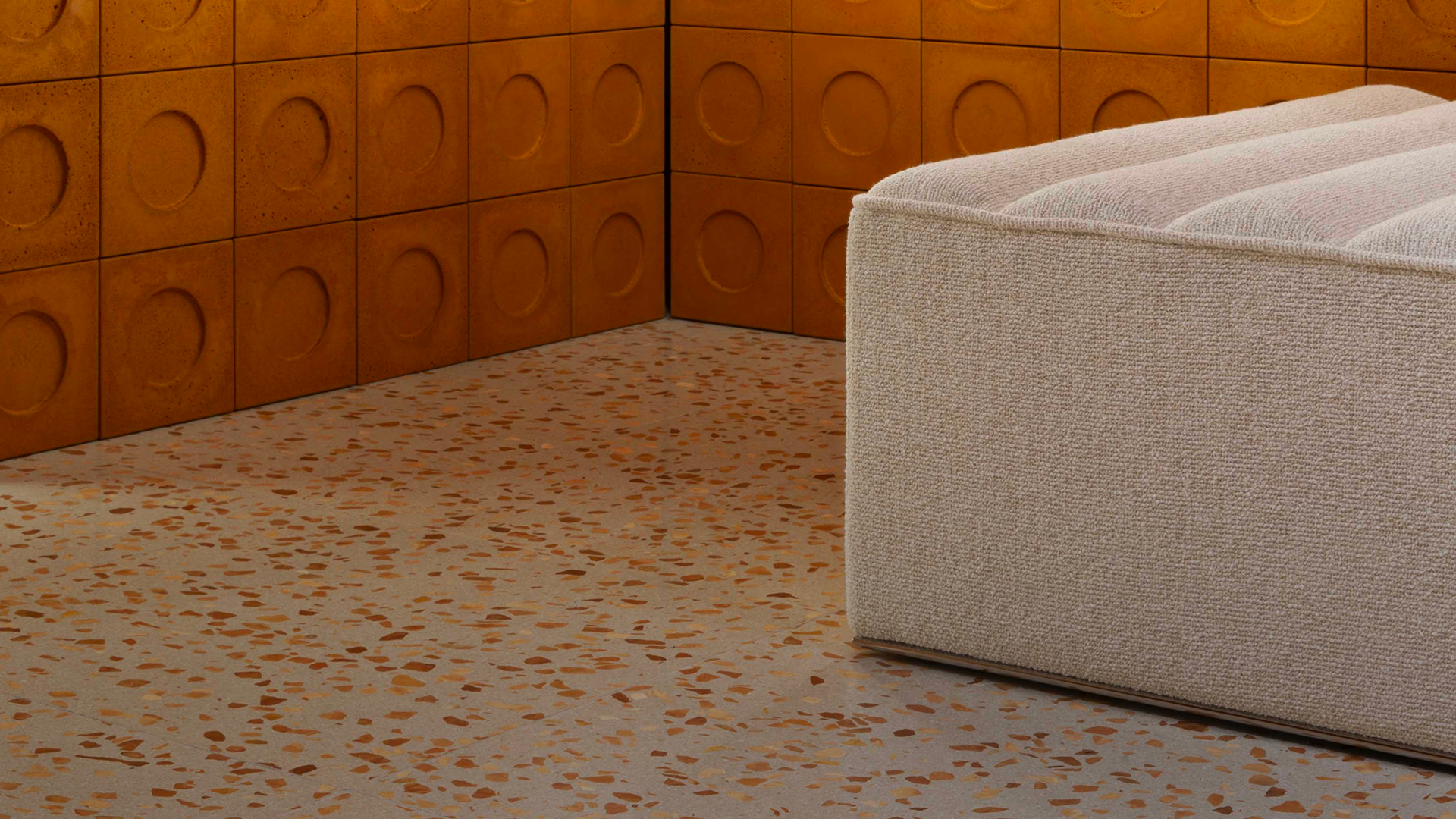
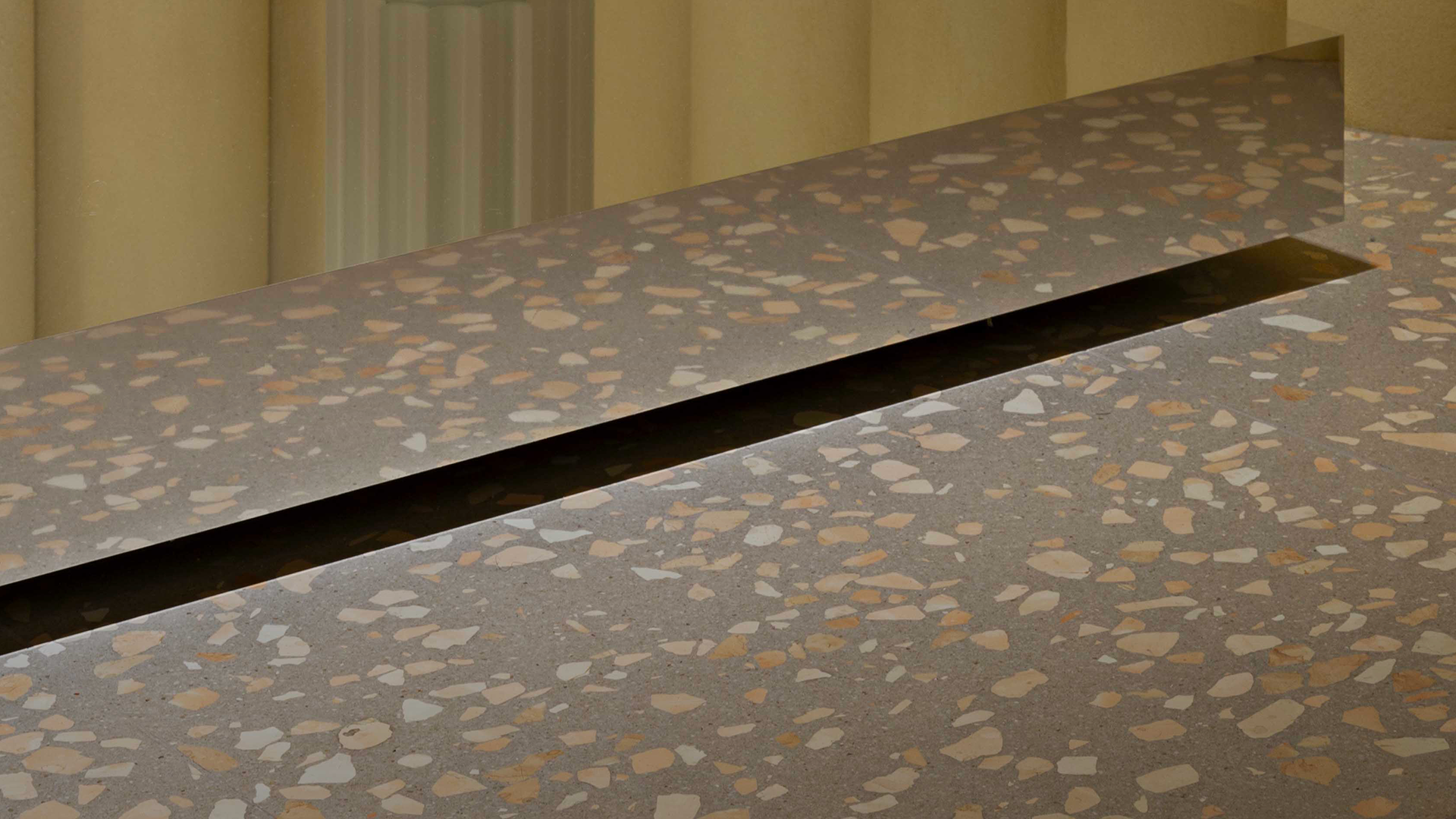
The Terrazzo Spezie Collection emerges from a dialogue between tradition and contemporary design and is defined by a color palette inspired by spices. The six shades of Terrazzo Tiles—Cardamom, Cinnamon, Clove, Juniper, Masala, and Sumac—range from soft greens and warm browns to balanced beiges and deeper, earthy accents, creating lively yet cohesive surfaces. Each color is designed to ensure versatility and visual continuity, making the collection suitable for both residential and contract applications, on floors and walls. Terrazzo Tiles are available in the 23 ⅝" × 23 ⅝" × 4⁄5” format, ideal for bedrooms, dining areas, living spaces, and showers.
Terrazzo Spezie Collection draws from the tradition of terrazzo to offer a contemporary interpretation that responds to the needs of today’s architecture. A solution designed to last, without compromising functionality or reliability.
Ultimately, the relationship between terrazzo and architecture is one built on trust. It grows over time, through use and everyday life, adapting and evolving alongside buildings. And this is precisely what makes terrazzo still relevant: its ability to change with architecture while remaining recognisable and true to itself.
Related Posts
Board School: Reviewing Wood Flooring Samples at Home
With qualities that are often subtle and dependent on factors like light and environment, it’s absolutely necessary to take a thorough look at flooring samples in your space. After visiting the Rel...
Read More
BuzziSpace x Relative Floors + Walls Pop-Up:
The BuzziSpace x Relative Floors + Walls pop-up grew from this very awareness: to create a space where materials, sound, and people coexist in balance. More than an event, it was an invitation to ...
Read More