Article | Voices
Interview with Bonnie Edelman
Article | Voices
Interview with Bonnie Edelman
Article | Voices
Interview with Bonnie Edelman
Light is usually the first thing we notice when we step into a space. It can be comforting or disorienting. In photography as in design, light is never just functional: it directs the eye, creates atmosphere, and shapes emotion.
February 24, 2026
Photography is the writing of light, and design begins with the same fundamental act: how light enters a space, settles on surfaces, and changes throughout the day.
This is where the conversation with Bonnie Edelman begins. An American photographer working with light and nature, she transforms landscapes into intimate, abstract images. The story unfolds at the intersection of photography and design—both acting as mediums for new visual languages shaped by light, sensitivity, imperfection, and the natural world.
The Language of Light
In Bonnie Edelman’s photographs, light is not a detail but a necessity. It activates space, transforms it, and makes each image possible. “Light is the most important thing, one hundred percent,” says Bonnie. “I’m not inspired to pick up the camera unless there is good light—something almost magical.”
In photography, light does not merely illuminate: it transforms what we see and the way we perceive it. The same is true in design. A space can be perfectly executed yet remain emotionally empty if light is not conceived as a living element. Understanding how natural light enters a space, shifts throughout the day, and interacts with materials is about designing not just rooms, but lived experiences.
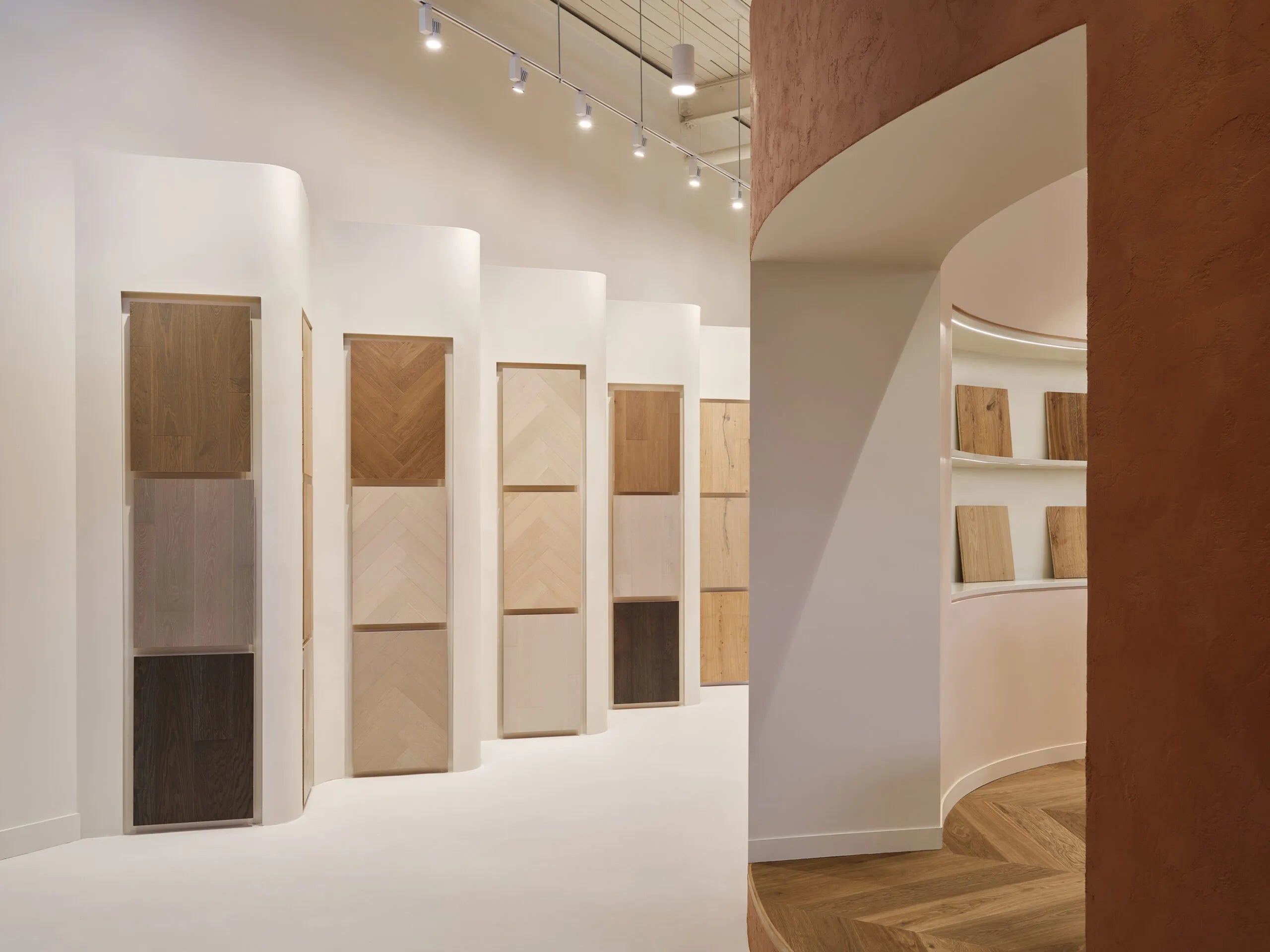
This principle is also reflected in the work of Relative Floors + Walls, where light plays a fundamental role in revealing materials. By illuminating surfaces, it creates contrasts, highlights differences, and tells the story of textures. In hardwood flooring, light plays a defining role: whether a surface is finished in gloss, satin, or matte directly influences its look and feel. In the Herringbone Chico collection, the brushed matte finish works with light to reveal depth and texture. Light enhances the geometry of the herringbone pattern and brings out the collection’s bold color contrasts, bringing each tonal variation clearly into focus.
Likewise, light reveals the wood grain, adding depth and emphasizing its natural character, as seen in the Engineered Wide Hardwood Flooring Plank Flyt collection—a German wide plank flooring with a matte finish—where light enhances the surface and makes the material’s structure clearly visible and expressive.


The Language of Imperfection
In the dialogue with Bonnie Edelman, the theme of imperfection emerges with particular clarity. “I love the word imperfection,” Edelman says. “We are all imperfect, and only nature is perfect. What is too symmetrical, too controlled, risks feeling cold and distant. By contrast, handmade elements—a ceramic piece, an irregular tile—carry character, uniqueness, and humanity.”
In nature, nothing is identical and nothing stands still. Variation is not an anomaly, but part of a larger, living balance. Bringing this logic into designed spaces means making them more authentic, more human, and more deeply connected to those who inhabit them.
Bonnie Edelman’s Land Scapes series is born precisely from this idea: from an error, an unforeseen accident that, through imperfection, is transformed into beauty. This approach closely resonates with the philosophy of Relative Floors + Walls, where materials—ceramic tiles, recycled stone, terrazzo, and engineered hardwood—do not strive for absolute perfection. Instead, they embrace the marks of time, variation, and material irregularity as sources of value.
From this perspective, imperfection becomes a form of expression: each surface is unique because it carries the marks of its past. A compelling example is the Recycled Stone Tile Collection by Relative Floors+ Walls, where reuse is reimagined as an act of renewal, fostering a seamless dialogue between craftsmanship and technology.
Ultimately, imperfection is not something to fix, but something to reveal. It is where a material finds its identity. At a time when standardization tends to smooth out differences, recognizing the value of imperfection means embracing a more thoughtful approach to design. It means accepting that materials, spaces, and people are constantly evolving, and that their strength lies precisely in this openness to change. Photography and design, each with its own language, become ways of observing and interpreting the world—not to make it flawless, but to express it in its authenticity.


Related Posts

BuzziSpace x Relative Floors + Walls Pop-Up:
The BuzziSpace x Relative Floors + Walls pop-up grew from this very awareness: to create a space where materials, sound, and people coexist in balance. More than an event, it was an invitation to ...
Read More
Building the City for the People Who Live in It
When we imagine cities we’ve never been to, we think of skylines, unique structures of architectural merit or geographic interest—rivers, oceans, hills. However, this distillation of a city prof...
Read More